
Timber House
Location :
Hill Country Ranch — Boerne area, Texas
Details :
5 Bedrooms, 5.5 Baths, 7,000+ Sq Ft · 40-Foot Living Room Ceilings · Includes latest security features
RECOGNITION :
100% Timber-Framed Mortise-and-Tenon Construction · Full Off-Grid Capability

“Everything in the house — cabinets, baseboards, doors, trim, timbers, beams — is solid white oak. We used clear cypress on the ceiling just to give a little contrast in color.“
— Mike Hollaway
Detailed specifications and features
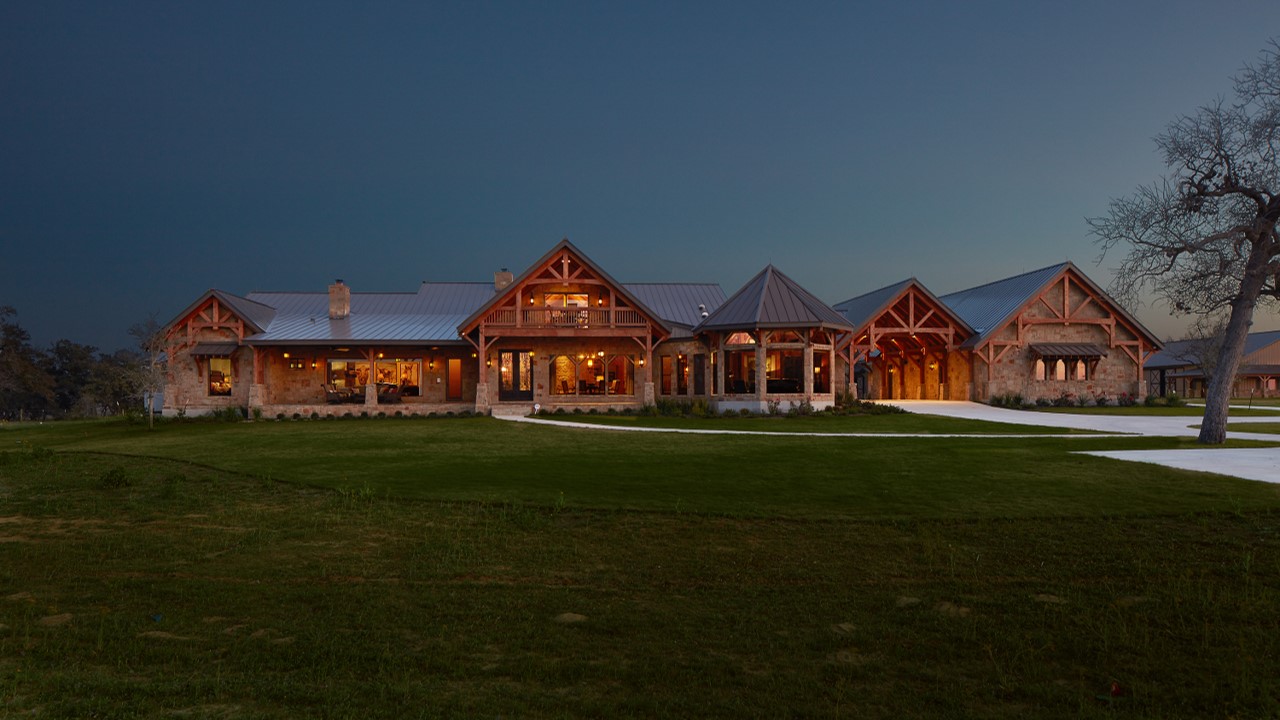
Timber House sits on a ranch on a slight ridge in the Hill Country — a build brought to Mike Hollaway Custom Homes by an architect designer for a couple who grew up in Michigan with traditional timber-frame homes and spent years looking for the right Texas property to build their own. The home is 100% timber-framed: every connection is mortise-and-tenon, executed without nails, screws, or bolts, with the load carried through interlocking wood joinery shaped by computer-routed precision and centuries-old technique.
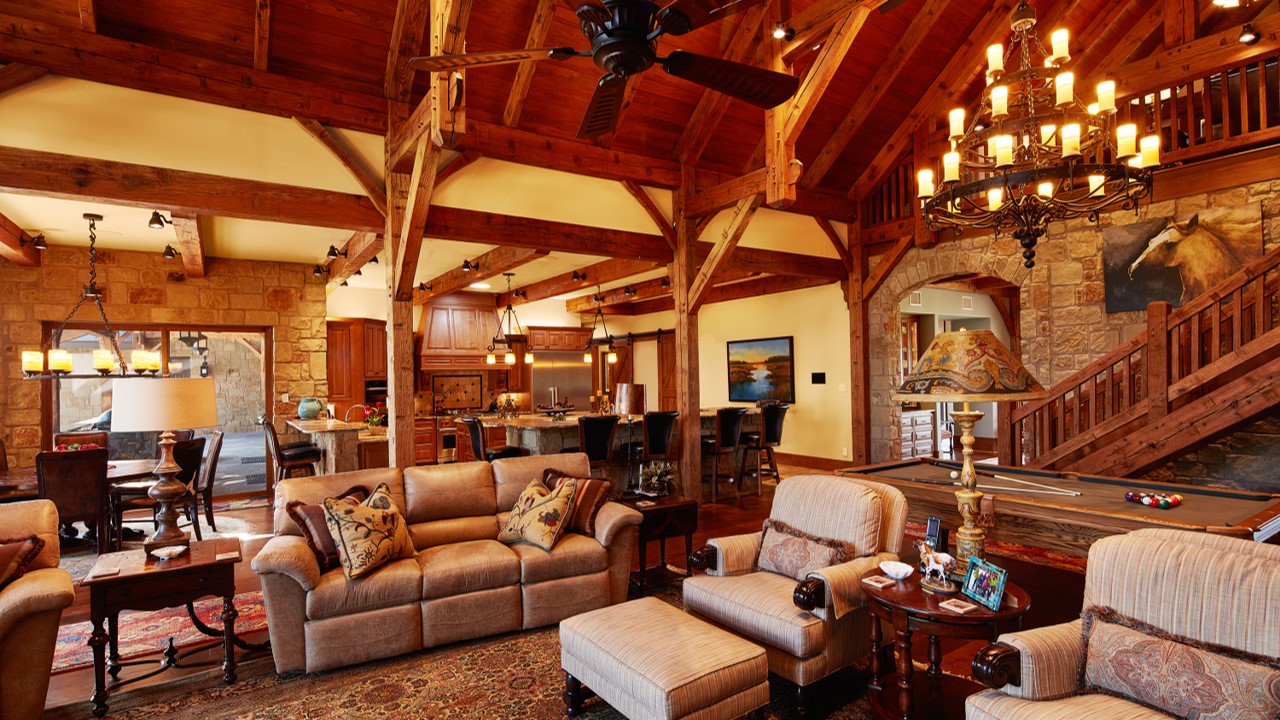
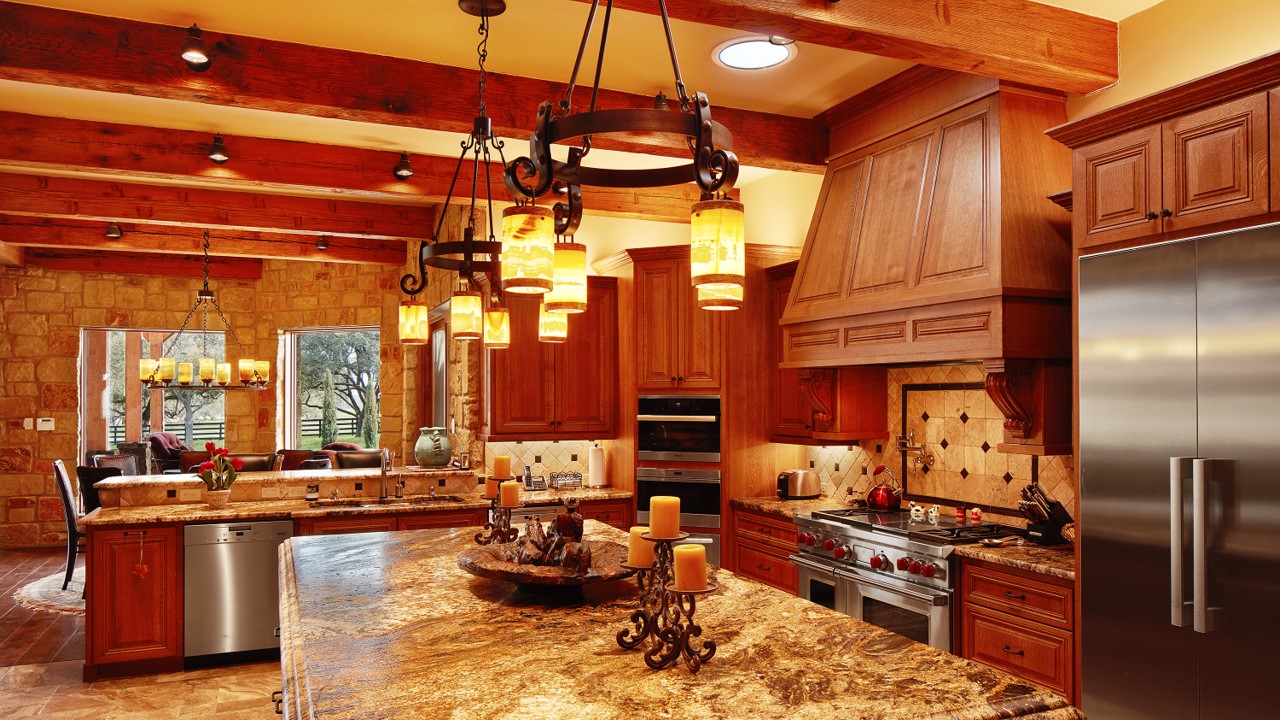
White oak runs through the entire home — cabinets, baseboards, doors, trim, timbers, and beams — with clear cypress used on the ceilings to deliver a slight color contrast. The main living area carries forty-foot ceilings. The roof system is a SIPs (structural insulated panel) installation that drives the home to an unusually high level of energy efficiency for a structure of this scale. Throughout the home, true masonry fireplaces — a rarity in this part of Texas — anchor the principal rooms.
The home is also designed for self-sufficiency at a level rarely seen in residential construction. It carries a true basement (itself unusual in Hill Country soil), which doubles as a safe room with poured concrete walls and ceiling, separate HVAC, its own power plant, separate propane and water, a hidden rear staircase to the outside, and an exterior fresh-air intake. Sections of the home use bullet-resistant glass, Kevlar wall panels, and steel doors rated for impacts up to .50 caliber. A whole-house backup generator pairs with a discreet, distance-sited solar field — placed out of view from the house at the owners’ request — to keep operations running through any interruption.
Design challenges
- Executing a true 100% timber-frame mortise-and-tenon home in Texas, where the craft and the suppliers are rare
- Running HVAC, electrical, and lighting through structural beams without compromising the timber aesthetic — and through a great room with no attic above
- Building a private residence with full off-grid resilience (food storage, power, water, ballistic protection) while keeping the home visually warm and family-focused
Design solutions
- Partnering with two Texas timber suppliers who design and cut beams on computer — with traditional mortise-and-tenon joinery — assembled on site with cranes and skytrack lifts
- Drilling approximately 180–190 directional and accent lights through the structural beams to hide all wiring; building a double wall between the game room and living room with a pocket that swallows a folded ping-pong table
- A true basement safe room with concrete ceiling, separate utilities, hidden staircase exit, fresh-air intake, and ballistic glass / Kevlar / steel-door protections; plus a 12-month food and supply pantry across the kitchen and air-conditioned garage
Construction timeline and process
The build is a study in sequencing. Timber Houses don’t get framed the way conventional Texas homes do. Embed plates were set in the foundation at every column load point because so much of the structural load travels through the outside beams. Two Texas suppliers fabricated the beams to mortise-and-tenon specifications — some assembled flat on the ground and lifted into place, others built up vertically because of their size.
To protect the beams once they were raised, the team installed clear cypress tongue-and-groove directly to the timber, then layered plywood, foam insulation, and another layer of plywood to form the deck, dried in the structure, and put the roof on it. This sequence preserved the wood through weather while the SIPs roof system was completed above.
Inside, every light in the home — from the kitchen and hallways to the great room — is monitored and controlled remotely through panels and phone, and music is wired into every room. The lighting installation in the timber beams alone consumed an unusual amount of time: drilling through the beams to hide all wiring meant that the upstairs balcony overlooking the great room could read clean from above, with no exposed conduit running across the trusses.
Awards and recognition received
Timber House is one of the most distinctive timber-frame residences ever built by Mike Hollaway Custom Homes — 100% mortise-and-tenon, executed at a scale (40-foot great-room ceilings, 7,000+ square feet of conditioned space) that few builders attempt in Texas. Its combination of traditional joinery, SIPs roof system, true basement safe room, and discreet off-grid capability puts it in a category of one within the firm’s portfolio.
Client Story Integration
“A little background on the owner — they came from Michigan, grew up in more of a timber type of home, and after many, many years of finding the right location, developed and designed this house.“
— Mike Hollaway
The owners spent decades waiting for the right land, the right architect, and the right builder. The home reflects all three: a couple’s lifelong sense of how a timber-framed home should feel, designed to host their grown children and growing flock of grandkids, complete with a petting zoo and a level of resilience most people would associate with a small institution rather than a private residence.
Technical Details


Square footage and lot size
Approximately 7,000+ sq ft on a Hill Country ranch ridge; 40-foot great room ceilings; latest security features
Architectural style and features
Timber frame — 100% mortise-and-tenon construction; solid white oak interior throughout (cabinets, baseboards, doors, trim, timbers, beams); clear cypress ceilings; true masonry fireplaces; stone-and-wood exterior
Special construction techniques
Computer-cut mortise-and-tenon joinery from two Texas suppliers; foundation embed plates at column load points; crane and skytrack assembly; ~180–190 accent lights drilled through structural beams with concealed wiring; pocketed double-wall ping-pong storage; concealed safe-room door behind master cabinets
Energy efficiency elements
SIPs (zip panel) insulated roof system; whole-house backup generator paired with off-site solar field (sited out of view); separate utilities (HVAC, propane, water, power plant)
Smart home integration
True smart home — every light controlled by panel, remote, or phone; full-house climate, audio, and lighting integration; music wired into every room